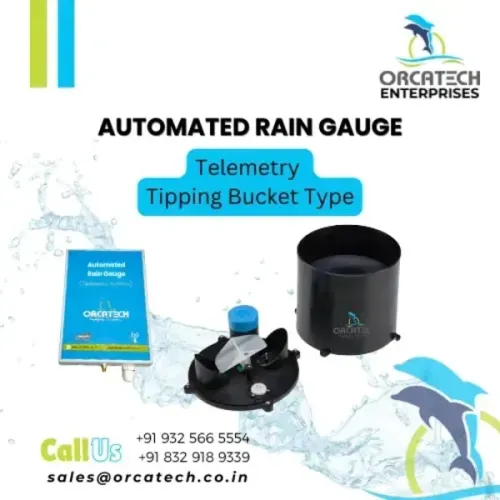
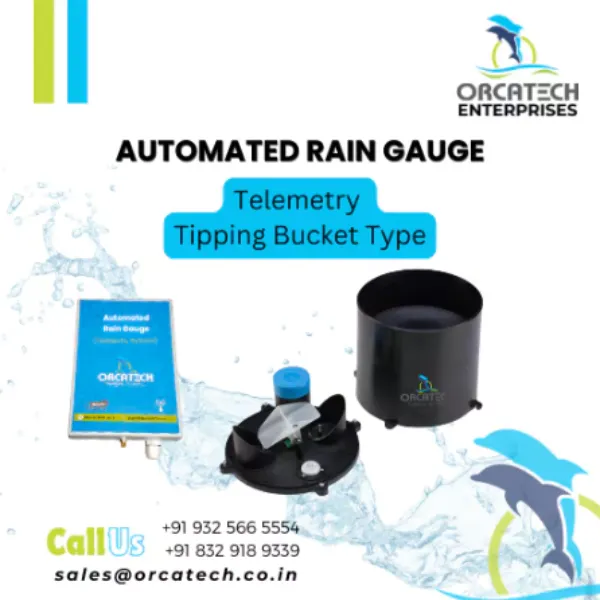
A High-Accuracy Rain Gauge can still produce misleading data when it is installed in an unsuitable location or maintained inconsistently. Rainfall measurement is highly sensitive to wind, nearby obstructions, uneven mounting, debris, and changes around the monitoring site.
For environmental consultants, irrigation authorities, contractors, and water-resource teams, correct siting is just as important as instrument specification.
Installing Too Close to Obstructions
Buildings, trees, poles, walls, and other structures affect airflow. They may shield the gauge from rainfall in one wind direction or create turbulence that changes how precipitation enters the collector.
The instrument should be installed in an open area where surrounding objects have minimal influence. When perfect exposure is unavailable, the location should be documented carefully so future users understand the site limitations.
Vegetation growth must also be considered. A location that is clear during commissioning can become obstructed months later if nearby shrubs or tree branches are not controlled.
Mounting the Gauge Out of Level
Many rain-gauge designs rely on water entering through a level collector. If the instrument tilts, the effective collection area changes and internal mechanisms may not operate correctly.
The mounting base should be rigid, stable, and checked with an appropriate level. Settlement, vibration, animals, maintenance activity, or accidental impact can alter alignment over time, so levelling should form part of routine inspection.
Ignoring Wind Effects
Wind is a major source of rainfall-measurement error. Strong airflow can carry droplets over the collector, causing under-catch. Exposure conditions should therefore be consistent and suitable for the monitoring objective.
Installing a gauge on a roof may seem convenient for communication and security, but roof edges and structures can produce turbulent airflow. Ground-level installations may provide better exposure when they are properly protected from interference and splash.
Allowing Splash and Runoff to Enter
Rain striking nearby hard surfaces can splash into the collector. Water running from a structure, branch, or cable may also create false readings.
The area around the gauge should be planned to prevent external water from reaching the collection opening. At the same time, the installation must avoid depressions where flooding could submerge equipment or damage wiring.
Neglecting Cleaning and Inspection
Dust, leaves, insects, bird droppings, and other debris can block the collector or internal path. A partially obstructed opening may continue producing data, but the totals may be lower than actual rainfall.
Maintenance should include:
- Cleaning the collector
- Inspecting the funnel and drainage path
- Checking levelling
- Examining cables and connectors
- Testing the measuring mechanism
- Reviewing battery condition
- Checking telemetry status
- Comparing records with nearby stations
Every intervention should be documented so unusual data can be interpreted later.
Using an Unsuitable Logging Interval
The correct logging interval depends on the application. Daily totals may be adequate for basic rainfall records, while flood forecasting and drainage studies may require much shorter intervals to understand rainfall intensity.
A system should preserve both cumulative rainfall and time-based detail where high-intensity events matter. Teams must also confirm how the logger handles communication failures and whether readings remain stored locally.
Pune and Maharashtra Monsoon Conditions
Pune’s rainfall is strongly seasonal, and storm intensity can vary between local areas. Urban development, terrain, drainage characteristics, and changing land use can make site-specific data valuable for infrastructure and environmental projects.
Monitoring equipment should be commissioned before the critical rainfall period wherever possible. Waiting until severe weather begins can leave too little time to identify communication, drainage, or installation problems.
Protecting Long-Term Data Quality
A High-Accuracy Rain Gauge is most useful when its location, mounting, maintenance, logging, and validation remain consistent. Site photographs, coordinates, installation height, obstruction details, service records, and configuration changes should be retained with the dataset.
Accurate rainfall monitoring is not achieved through instrument specifications alone. It requires disciplined site selection and continuing quality control. Avoiding common installation mistakes gives engineers greater confidence when using the resulting data for drainage planning, irrigation management, environmental studies, and flood-risk assessment.
Keywords