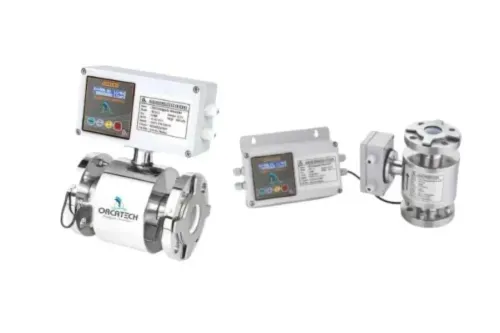
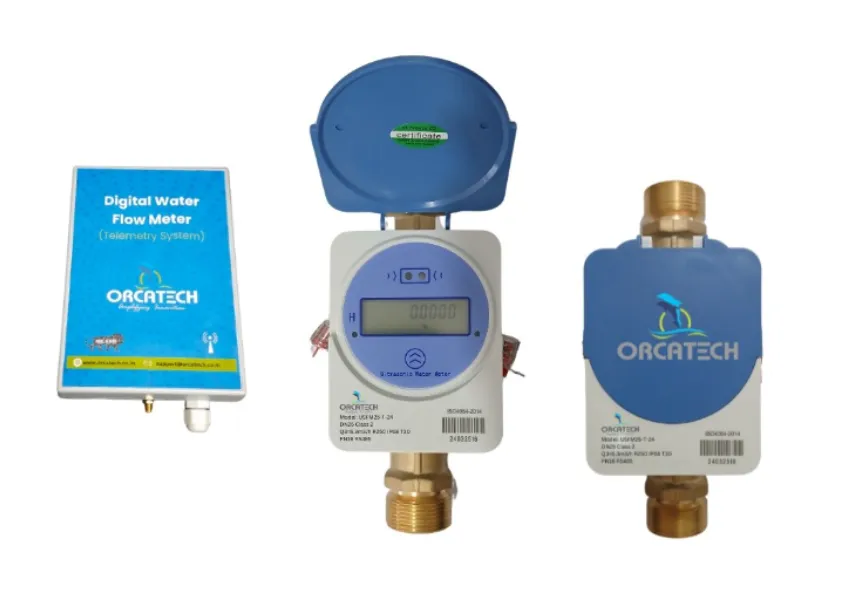
An Electromagnetic Flow Meter for Water Applications is often considered when users need accurate measurement without moving components inside the pipeline. The technology is widely applicable to conductive liquids, including many types of raw water, treated water, wastewater, and process water.
Its unobstructed measuring tube can reduce pressure loss and mechanical wear. However, conductivity, pipe-filling conditions, lining compatibility, installation quality, and grounding must be checked before selection.
How Electromagnetic Measurement Works
An electromagnetic meter applies a magnetic field across the measuring tube. When a conductive liquid moves through that field, a voltage is generated. Electrodes detect the signal, and the transmitter calculates flow velocity and volumetric flow.
Since no rotating turbine or mechanical element is required in the flow path, the meter is not affected by bearing wear in the way some mechanical devices can be. The open bore can also make it suitable for liquids containing suspended material, provided the meter materials are compatible with the process.
Suitable Water Applications
The technology may be evaluated for:
- Municipal water distribution
- Water-treatment plants
- Wastewater pipelines
- Industrial process water
- Cooling-water circuits
- Irrigation networks
- Effluent monitoring
- Pump discharge measurement
- Raw-water transfer
- Slurry applications
The liquid must meet the meter’s minimum conductivity requirement. It is therefore important to confirm fluid properties rather than assuming every liquid called “water” will behave identically.
Electromagnetic Meter Compared with Clamp-On Ultrasonic Technology
Both technologies can provide measurement without moving parts, but their installation methods differ.
An electromagnetic meter is installed inline and comes into direct contact with the liquid through its liner and electrodes. Installation typically requires pipeline modification and process isolation. Once installed correctly, it provides a defined measuring section and can support dependable permanent monitoring.
A clamp-on ultrasonic meter is installed outside the pipe. It reduces installation disruption but depends more heavily on pipe material, wall condition, sensor placement, and ultrasonic signal quality.
An electromagnetic system may be preferred when:
- The liquid is sufficiently conductive
- Permanent inline monitoring is required
- Pipeline shutdown is available
- The process contains suspended solids
- Pipe cutting is acceptable
- High-quality earthing can be provided
A clamp-on system may deserve consideration when shutdowns are difficult, external measurement is essential, or temporary surveys are planned.
Common Selection Mistakes
Choosing a meter only by nominal pipe size is risky. Users should also verify flow velocity, maximum and minimum flow rates, pressure class, temperature, liner material, electrode material, enclosure protection, and communication requirements.
Another frequent problem is installing the meter where the pipe may not remain full. Air pockets or partially filled conditions can cause unreliable readings. Suitable orientation and location must be considered during engineering.
Incorrect earthing can introduce unstable signals. Separate grounding arrangements may be required depending on pipe material and site conditions. Electrical installation should follow the manufacturer’s recommendations.
Planning for Pune Water Projects
Pune and neighbouring industrial regions contain a mix of municipal networks, manufacturing plants, treatment facilities, construction projects, and irrigation systems. Each presents different water quality, environmental exposure, access, and communication needs.
Outdoor installations may require suitable ingress protection and protection from weather. Remote sites may need data logging or telemetry. Industrial projects may require integration with PLC, SCADA, or central monitoring platforms.
Procurement teams should provide accurate process information and request documentation covering calibration, installation, materials, output protocols, and maintenance.
Evaluating Long-Term Value
The purchase price is only one part of the decision. Installation work, process downtime, calibration, maintenance access, expected service life, and data usability all affect lifecycle cost.
An Electromagnetic Flow Meter for Water Applications can be a strong choice when the liquid is conductive, the pipe remains full, installation requirements can be met, and permanent measurement is needed. A technically matched system will provide more value than a meter chosen from specifications without considering real operating conditions.
Keywords